What is Dual Pricing?
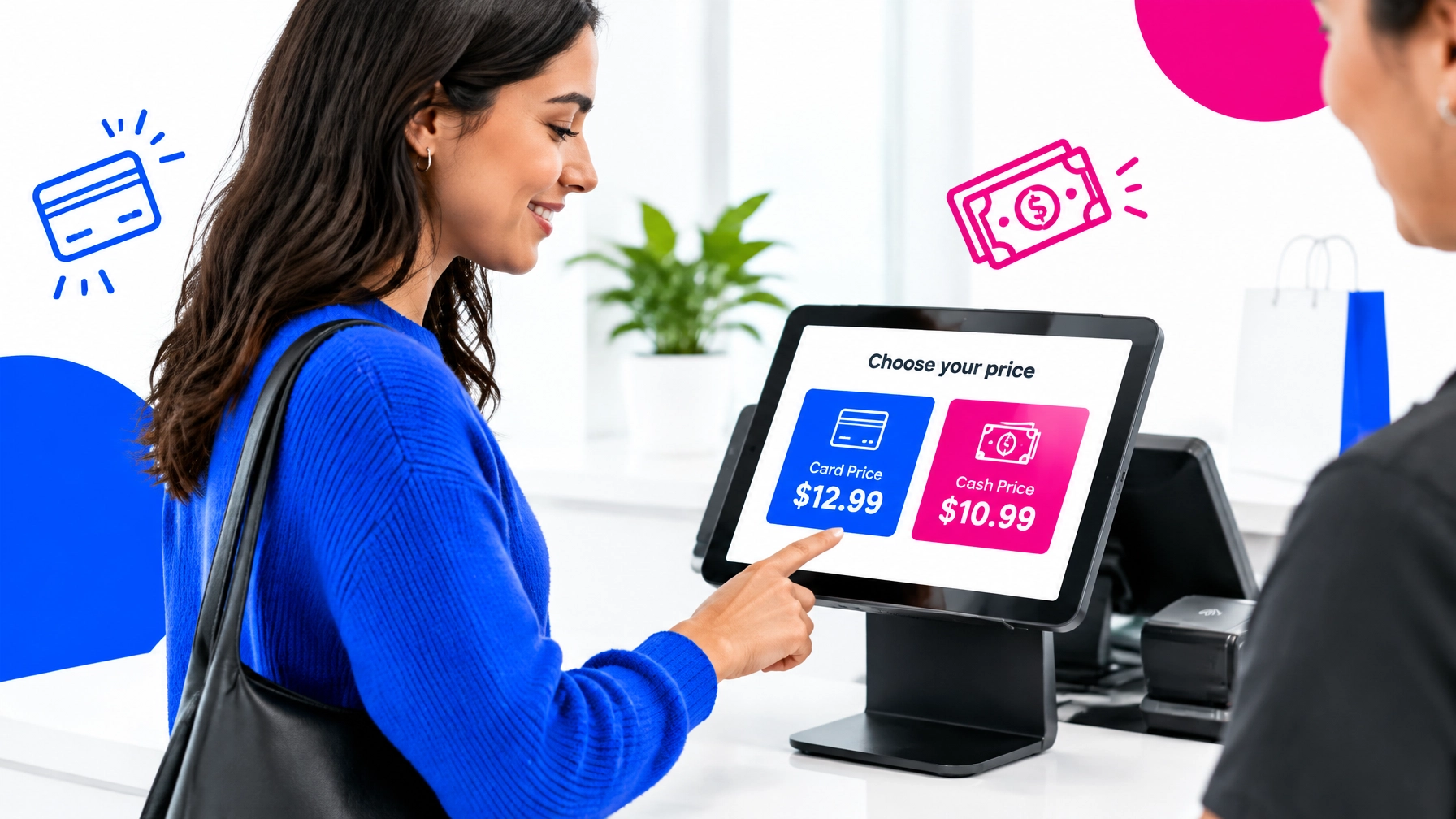
Credit card processing fees can take a noticeable bite out of every sale. Dual pricing is one way businesses can present payment options clearly while reducing or eliminating those processing costs.
Below, we’ll explain how dual pricing works, how it compares with a cash discount, and what to check before adopting a program. We’ll also walk through a simple price example and share how Deposyt’s program is designed to work in person and online.
What is dual pricing in credit card processing?
Dual pricing credit card processing means presenting customers with two prices before they pay: a card price and a lower cash price. The customer chooses which payment method and corresponding price works for them.
For example:

The prices should be visible before the customer completes the purchase, not introduced as an unexpected charge at checkout. When a customer pays cash, the merchant receives the $100 cash price. When the customer pays by card, the merchant receives the posted card price, subject to the program’s processing and transaction terms.
This approach can help a business reduce payment processing fees by building the cost of card acceptance into its displayed card price while offering a lower price for cash.
> Important: This is an illustrative example, not a recommended pricing formula for every business. Your prices and setup should reflect your costs, business model, card-network requirements, and applicable laws.
How does dual pricing work?
A dual-pricing setup typically follows three steps:
- Set both prices. Establish the card price and cash price for each product, service, or invoice.
- Show the options up front. Make the prices clear where customers make their purchase, in person or online.
- Let the customer choose. The customer selects a payment method and pays the price shown for that option.
The key is transparency. A customer should be able to understand the available prices before choosing how to pay. A program should also be configured to present the correct price consistently at the point of sale, on receipts, and through online checkout.

Does dual pricing mean adding a fee at checkout?
Not necessarily, and that difference matters. Dual pricing presents two prices before payment. A credit-card surcharge, by contrast, is generally an additional charge applied to a purchase when a customer pays with a credit card.
The labels alone don’t determine how a program is treated. The way prices are advertised and applied is important. Visa and Mastercard have rules for surcharging, and state or local requirements may also apply. For example, Visa’s merchant guidance discusses notice, disclosure, and surcharge limits. Review Visa’s U.S. merchant surcharge Q&A and Mastercard’s merchant surcharge rules.
For a general federal reference, 15 U.S.C. § 1666f addresses cash discounts for payments by cash, check, or similar means. Rules can depend on the details and may change. Ask your processor to review your proposed setup and confirm requirements for every state where you do business. This article is educational, not legal advice.
Cash discount vs dual pricing: what’s the difference?
People sometimes use cash discount vs dual pricing to describe two distinct approaches, although the terms are not always used consistently.

A provider may use different terminology, so ask how the program actually presents and processes prices. Don’t assume a program is compliant just because it’s called “dual pricing” or a “cash discount.” The setup, customer disclosures, and applicable rules matter.
Can dual pricing eliminate credit card processing fees?
Dual pricing may let a business shift the cost of card acceptance into the card price rather than absorb it as a separate operating expense. That can help businesses save money on payment fees and keep more revenue from eligible transactions.
However, look closely at what “zero fee credit card processing” means in a provider’s offer. Ask whether it refers to card processing charges specifically, and check for any monthly subscription, gateway, transaction, equipment, or other fees. A program can eliminate processing fees while still having other costs.
Deposyt’s dual-pricing offer is described as a way to eliminate processing fees for in-person and online payments. The website lists a $99/month flat price, next-day funding for eligible sales, and 24/7 live human support. It also notes that a small per-transaction gateway fee may apply. Review the current terms with Deposyt before enrolling so you understand your full costs and setup.
Want to explore the program? See how Deposyt dual pricing works, or book a free consultation to discuss your business.
How can dual pricing work in person and online?
A useful program should match the way you sell. In person, a compatible payment terminal can display both prices and help staff explain the choices. Online, the prices need to be clearly presented in the checkout, invoice, or payment flow before a customer submits payment.

Deposyt says its program supports in-person and online transactions, with payment options that include terminals, hosted checkout, invoices, and payment links. The company also says it integrates with platforms such as Shopify, QuickBooks, and GoHighLevel. Explore Deposyt’s online payment options and in-person payment options.
Before you launch, confirm that your pricing is displayed consistently across your website, quotes, menus, invoices, and point-of-sale system. For online sales in particular, review the customer experience on mobile as well as desktop.
What to ask before choosing a dual-pricing provider
Use these questions to compare programs and avoid surprises:
- How are both prices displayed before a customer pays?
- Does the system distinguish card types and apply the correct pricing?
- Are prices and receipts configured consistently for in-person and online sales?
- What does the advertised “zero fee” offer include, and exclude?
- Are there monthly, gateway, equipment, or other charges?
- How does funding work, and when do eligible transactions reach your bank?
- Who helps with setup, staff training, and compliance questions?
- Can the provider support your current payment platforms and business model?
Deposyt says it has more than 25 years in payments and provides 24/7 live human support. Ask the team to walk through your actual transaction flow and estimated costs before deciding. Use the Deposyt dual pricing calculator to get an initial estimate, then request a review based on your business’s real transaction mix.

Is dual pricing right for your business?
Dual pricing may be worth considering if credit card processing fees are taking a meaningful share of your sales and you can present payment options clearly. It can be relevant to retailers, service providers, consultants, coaches, and online businesses, but the best fit depends on your customer experience, sales channels, and pricing needs.
Before making a change:
- Review your current processing statements and costs.
- Compare your full program costs, not only the advertised monthly price.
- Confirm the pricing structure and disclosures with your provider.
- Test the checkout experience and make sure your team can explain it simply.
Want to explore ways to reduce payment processing fees? Learn more about Deposyt’s dual-pricing program and book a free consultation. Ask for a clear review of your current fees, how the two prices would appear to customers, and what your complete costs would be.